The development of information technology has driven changes in manufacturing systems, particularly in data management and production process integration. One innovation that is increasingly being adopted is the cloud-based manufacturing system, which utilizes cloud computing to manage and integrate all production activities in a centralized and real-time manner.
Definition of Cloud-Based Manufacturing System
A cloud-based manufacturing system is a production system that uses cloud computing technology to store, manage, and process production data. In this system, data is not stored locally but on cloud servers that can be accessed via the internet.
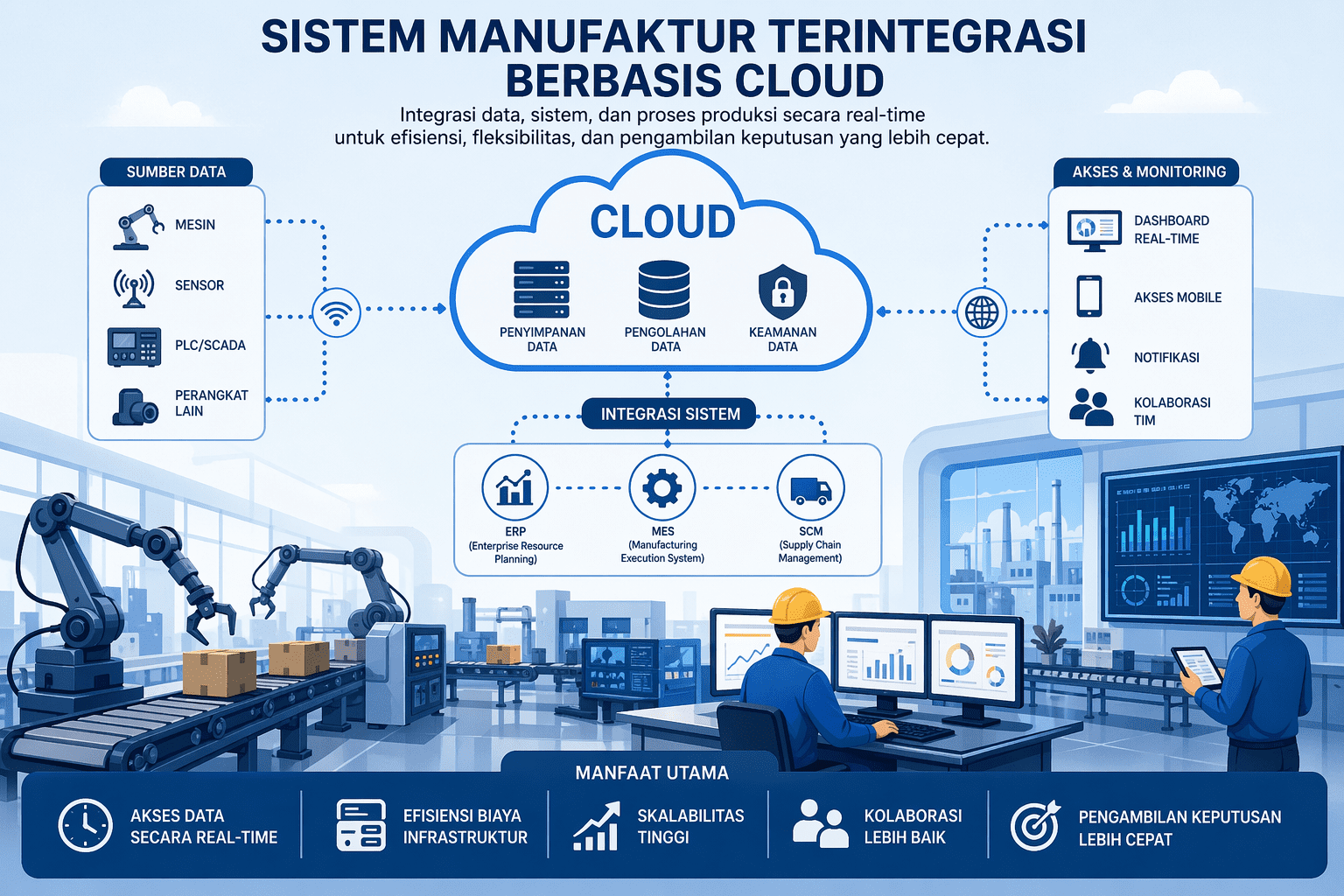
With this system, various components in the manufacturing process such as machines, sensors, and software can be connected within a single integrated platform. This enables better coordination between different parts of production.
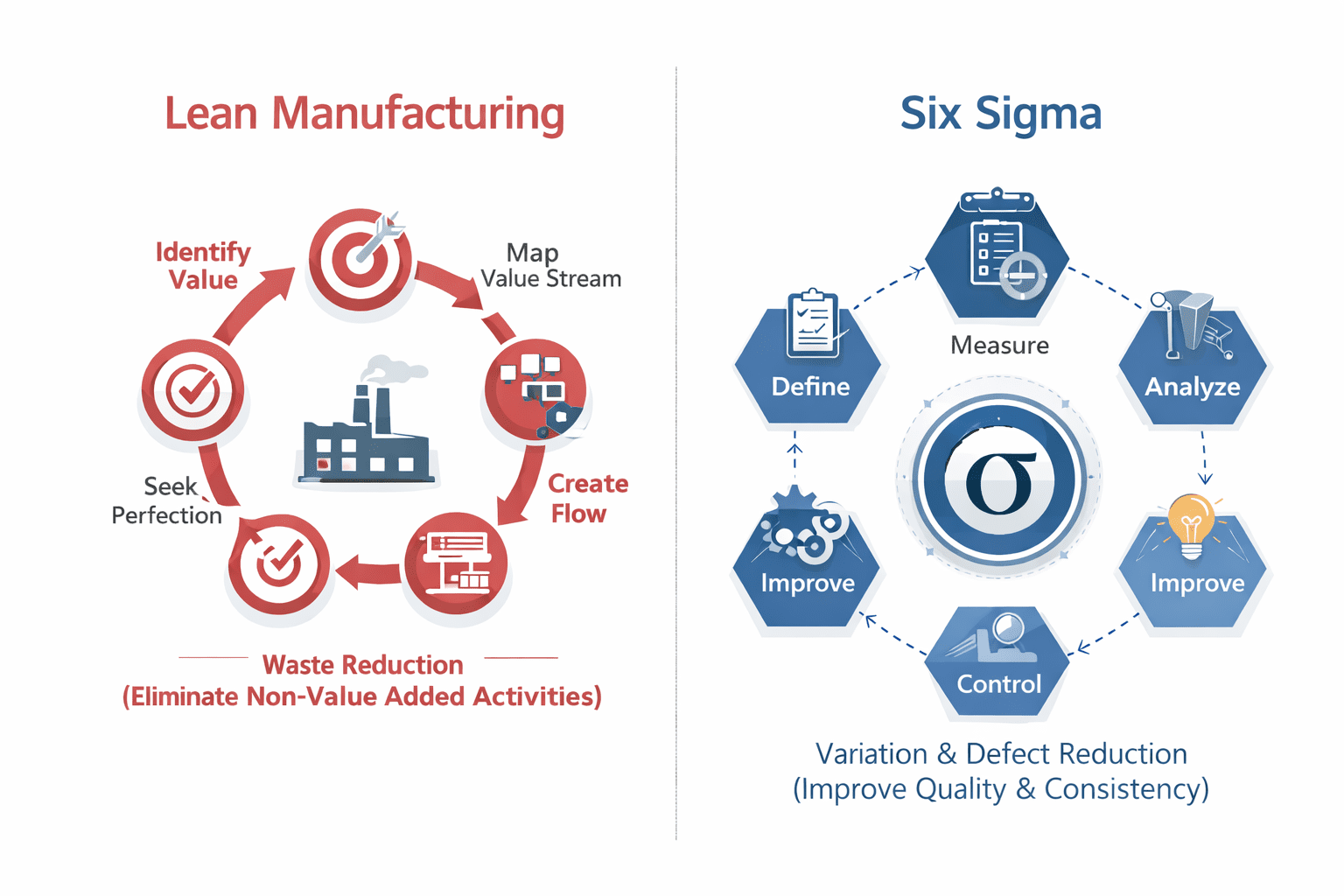
Read also: Differences Between Lean Manufacturing and Six Sigma: Which is More Effective?
Integration Concept in Cloud Manufacturing Systems
One of the main advantages of this system is its ability to integrate various aspects of production, including:
- Production Data Integration
Data from various sources such as machines, sensors, and management systems can be collected into a single cloud platform. This makes analysis and decision-making easier. - Operational System Integration
Systems such as ERP (Enterprise Resource Planning), MES (Manufacturing Execution System), and SCM (Supply Chain Management) can be connected within one cloud system. - Cross-Location Integration
Companies with multiple factories or branches can manage all their operations centrally through the cloud.
How Cloud-Based Manufacturing Systems Work
Cloud-based manufacturing systems operate through a series of integrated processes, as follows:
- Data Collection
Data is collected from various devices such as machines and sensors.
- Cloud Storage Data is sent and stored on cloud servers.
- Data Processing
The cloud system processes data to generate relevant information.
- Access and Monitoring
Data can be accessed by users through dashboards in real-time.
Benefits of Cloud-Based Manufacturing Systems
Below are some of the benefits of cloud-based manufacturing systems:
- Real-Time Data Access
Companies can monitor production conditions directly without being physically present at the factory. - Infrastructure Cost Efficiency
There is no need for large investments in local servers because data is stored in the cloud. - High Scalability
The system can easily be adjusted according to company needs. - Better Collaboration
Teams from different locations can work together using the same data. - Faster Decision-Making
Real-time data availability helps management make accurate decisions quickly.
FAQ (Frequently Asked Questions)
- What is the difference between cloud-based manufacturing systems and traditional systems?
Traditional manufacturing systems store data locally (on-premise), so access is limited to certain locations. In contrast, cloud-based systems allow data to be accessed online from anywhere and support real-time integration and monitoring. - Are cloud-based manufacturing systems safe to use?
In general, cloud systems have a high level of security because they are equipped with data encryption, firewalls, and layered protection systems. However, security also depends on the cloud service provider and the company’s internal policies in managing data access. - Is specialized expertise required to manage this system?
Ideally, companies need personnel who understand IT and digital systems. However, many cloud platforms today are user-friendly and can be used with relatively short training.
Conclusion
Cloud-based integrated manufacturing systems are a modern solution for improving the efficiency and effectiveness of production processes. With the ability to integrate data and systems in real-time, companies can manage operations more effectively and respond quickly to changes.
Although there are some challenges in implementation, the benefits offered make this system an important innovation in the development of modern industry. Therefore, adopting cloud manufacturing is a strategic step for companies that want to enhance competitiveness and operational performance.angkah strategis bagi perusahaan yang ingin meningkatkan daya saing dan kinerja operasional.
References
1. Tanaya, P. I. (2024). The state of the knowledge of cloud computing technology for manufacturing automation systems. Jurnal Rekayasa Sistem Industri, 13(1), 79–90.
2. Steby, S., Eryc, E., & Tjahyadi, S. (2026). Evaluating the effectiveness of Cloud-Based ERP Systems in Supply Chain Management in Manufacturing. JURNAL PETISI (Pendidikan Teknologi Informasi), 7(1), 76–88.
Author : Ziyadatunni’mah | PuTI Intern